
"rural development"
600 article(s) found

Introduction of Colombian Coffee Grinding characteristic Price Variety Baking record degree Manor producing area
The pure taste of Colombian coffee, in addition to the natural environment with the most favorable conditions for coffee growth, is inseparable from the hard work of local growers. In Colombia, coffee cultivation has reached 1.07 million hectares, there are about 302000 coffee plantations in the country, and 30 to 40 per cent of the rural population depends directly on coffee production. There are many farms in Colombia, but
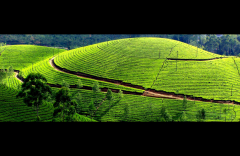
What is the best tea in Nepal? How much is the authentic Himalayan black tea per jin?
Twenty years ago, the Nepalese government turned its attention to tea, partly to alleviate rural poverty and, on the other, to generate foreign income through exports of sustainable production. Exports of Himalayan Nepalese tea have expanded, and long-term investment since 2001 paid off, when Nepal first adopted
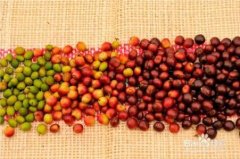
A brief introduction to the market price of fragrant and mild El Salvador Himalayan coffee varieties
The government finally realized the great role of coffee in the national economy, such as solving employment, earning foreign exchange and developing agricultural production, so it privatized some coffee export industries in 1990, hoping to increase the income rate of coffee in the export market. Salvadoran coffee ranks alongside Mexico and Guatemala as producers of Asa and Meldo, and is competing with other countries.

What is the coffee flavor and taste of the Topazio variety of barinas Coffee Farm in Brazil? Brazilian coffee beans
Professional coffee knowledge exchange more coffee bean information please follow the coffee workshop (Wechat official account cafe_style) Brazil barinas coffee farm Topazio coffee flavor and taste? How to make Brazilian coffee beans? As a pioneer in the Cerrado area, Barinas Farm and its family can be traced back to 1820, when Mrs. Thereza Tomasia and her

A media delegation from beautiful villages in Hainan went to Wanning to visit Xinglong Coffee Valley.
On the morning of September 24, the 2016 Beautiful Countryside Hainan Tour (Wanning Station) went into the coffee valley of Xinglong overseas Chinese Farm in Wanning City, where everyone tasted the strong aroma of coffee in this beautiful tourist resort. Aerial photos of Xinglong Coffee Valley. Tian Jian, a netizen of the style group, provides a picture. Aerial photos of Xinglong Coffee Valley. Tian Jian, a netizen of the style group, provides a picture. According to reports, Xinglong Coffee Valley is

Is Bolivian boutique coffee beans cost-effective? Introduction of Super Flavor of PB Round Bean washed by Caranavi
Bolivia's Caranavi washed round beans are single-origin premium coffee beans from the Sol de laMaana program in the Caranavi region of Bolivia. The coffee is washed and roasted at a medium level. Rich body and citrus acidity. Aromas of sugarcane, litchi, red cherry and toffee and peach. This very special peaberry micro batch is from Sol de l.
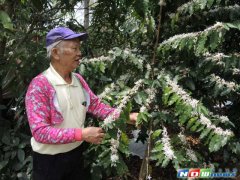
Coffee flowers in the foothills of Bagua Mountain in Ershui Township are in full bloom like white March snow.
Recently, the weather is sometimes sunny and sometimes rainy, and the changeable weather makes the coffee flowers blooming in the foothills of the Bagua Mountains in Ershui Township, just like the white March snow, which is not only fragrant, but also very beautiful, attracting many tourists to come to watch. Cai Wenlin, director general of the Ershui Rural Farmers' Association, said that because the flowering period is only three to five days, if you want to enjoy the flowers, you should move faster. Er Shui Xiang Hui Min Cun eight

Flavor characteristics of Mexican Coffee | three largest Mexican Coffee producing areas | Ninth largest Coffee exporter
On small mountain farms run mainly by local producers, you will find that an often overlooked gem is thriving: Mexican coffee. Mexico is often overlooked when people list famous coffee producing areas. However, it has a lot to offer: a unique fruity flavor, positive social and environmental impacts, and a rich coffee production heritage. Mexico produces a lot.

The reason for the large scale of coffee cultivation in Rwanda
Professional coffee knowledge exchange more coffee bean information Please follow the coffee workshop (Wechat official account cafe_style) Rwanda is a great place, the weather there is very good, this is because the climate allows coffee to grow. The vigorous development of coffee in Rwanda has benefited from the characteristics of solar and equatorial mist, high altitude and volcanic soil suitable for coffee growth. Coffee is

mesocarp fleshy, sweet Colombia Hope Manor Coffee Flavor Taste
The pure flavor of Colombia coffee comes from the natural environment of Colombia, which has the most favorable conditions for coffee growth. But beyond that, it is inseparable from the hard work of local growers. In Colombia, coffee is cultivated on 1.07 million hectares, there are about 302,000 coffee plantations in the country, and 30 to 40 per cent of the rural population depends directly on coffee production. Colombia

Colombian Huilan Coffee Grinding method introduction to the taste characteristics of fine coffee in producing areas
The pure taste of Colombian coffee, in addition to the natural environment with the most favorable conditions for coffee growth, is inseparable from the hard work of local growers. In Colombia, coffee cultivation has reached 1.07 million hectares, there are about 302000 coffee plantations in the country, and 30 to 40 per cent of the rural population depends directly on coffee production. There are many farms in Colombia, but

The encounter between hot spring and coffee creates a new bright spot in the countryside.
Zhan Mingchong, a coffee farmer in Taitung, Taiwan, used local hot spring water to develop hot spring coffee beans with a unique flavor, with a sweet smell of caramel, and became a local brand. Zhan Mingchong was awarded the Top Ten Shennong Award in Taiwan in 2013. Using the self-developed hot spring coffee fermentation tank, Zhan Mingchong added hot spring water to coffee beans and developed hot spring coffee.

The development history of Papua New Guinea
The legendary background of modern coffee. In Papua New Guinea, about 75 per cent of coffee products come from small local farmers

Rwanda Musasha coffee bean flavor _ Rwanda coffee producing area story _ how much is Rwanda coffee bean
Professional coffee knowledge exchange more coffee bean information Please follow the coffee workshop (Wechat official account cafe_style) Rwanda coffee beans Musasha Cooperative African Elephant Coffee grown at 1500 to 2000 meters above sea level, mainly bourbon, traditional washing treatment, with dried lemon, wild berry acid, citrus, plum juicy flavor, maple syrup sweet, dark chocolate deep flavor.

Development History of Coffee beans in Papua New Guinea
The coffee industry plays an important role in the country's economy. More than 1 million people are directly and indirectly engaged in the industry. The government encourages planting by offering a minimum purchase price. The industry itself is controlled by the Coffee Industry Council (Coffee Industry Board). The commission is located in Goroka, in the eastern part of the island, while exports are handled by private companies. The frost of 1975

Yunnan Dehong small Coffee planting Base
Dehong small grain coffee is native to Africa and Ethiopia and is the main cultivated variety in the world. In 1951, coffee seed was first introduced to Dehong Luxi Cotton cropping Experimental Station for productive cultivation. The seedlings were planted in 6 mu and grew well. In 1956, the Dehong Prefecture Committee decided to vigorously develop coffee in the whole state, and held a training course on coffee planting techniques throughout the state, so that small-grain coffee was widely developed in the whole state. 1958 de

Papua New Guinea Arabica Coffee Papua New Guinea Coffee is similar to Indonesian flavor
Papua New Guinea is a country in Oceania and the third largest island country on earth. It was ranked as the sixth fastest growing economy in 2011 and one of the most culturally diverse countries in the world. It is also one of the countries with the most rural areas in the world, so agriculture plays an important role in the country's economy; coffee has now become its highest source of foreign exchange earnings. Papua coffee

Colombia Coffee Introduction and Development History
Colombia coffee Colombia coffee, Arabica coffee is quite representative of a good variety, is a traditional deep roast coffee, with a strong and memorable taste. Its aroma is rich and thick, with a clear, high-quality acidity, high balance, sometimes nutty, lingering, both in appearance and quality, Colombia coffee are comparable

Historical Origin and Development of Colombian Coffee varieties Flavor characteristics of Colombian coffee beans
The cultural process of coffee development in Colombia is the natural environment with the most favorable conditions for coffee growth. But beyond that, it is inseparable from the hard work of local growers. In Colombia, coffee cultivation has reached 1.07 million hectares, with about 302000 coffee plantations and 30 to 40 per cent of farmers.